Speed Reading For Education

7 Speed Reading EDU is the world's most advanced accelerated reading system for schools. Based on proven principles of faster reading, 7 Speed Reading EDU contains all the features of 7 Speed Reading plus:

The next step is to see 7 Speed Reading for yourself. Simply fill out the form and we'll send you a free no obligation trial of the full version of 7 Speed Reading EDU.

speedreadingtechniques.org

On the pro side it has easy-to-use interface, video tutorials, multiple user accounts, well-structured course system for beginners & advanced students plus the ability to exercise with any digital text.

Elbert Zeigler

"I found 7 Speed reading. Doing eye exercises, warm-ups before reading, and how to look at words in groups instead of one at a time improved my reading and comprehension. I recommend 7 Speed Reading for you."

courselounge.com

7 Speed Reading is a decent speed reading software with an innovative approach. The customizable features are quite appealing since it allows you organize your speed reading training effectively.

Daniel Walters

"I have always struggled with reading slowly. Once I started using 7 Speed Reading, I did notice an improvement from approx. 200 wpm to 300 wpm."

winningspirit.com

If you want to learn how to speed read so that you can read everything faster, your best option is to get the self-paced speed reading course called 7 Speed Reading. It is designed to be the world’s most powerful speed-reading training program.

bestadvisor.com

From learning how to read and comprehend faster to how to keep your eyes healthy, everything is covered in this course for almost any age, and a team of professionals will help you master it.

Stephen L. (Reviewer)

I liked the accessibility of it. It helps, because users are able to easily maneuver throughout the software to varying levels and practice their reading at varying speeds.

Devad Goud

After having used this software, I learned techniques and skills such as eliminating my subvocalization, which not only greatly enhanced my speed reading, but also allowed me to get more engagement in what I read.

Reinard Mortlock

The biggest problem I had was sub-vocalization, 7 Speed Reading helped a lot with techniques to improve this and substantially improve my reading speed. The application is easy to use with loads of books to read to improve your reading skills.

Adel Serag

When I seriously exercise using the app, in no time, my reading speed goes from less than 400 to 600 and my target is 900 plus.

Nik Roglich

The pace trainer is great for getting my eyes focused and sharp. Also the word search exercise is very important, gets me searching for specific text.

Jose Godinez

I have improved my speed reading and comprehension since I started using 7 Speed Reading, I enjoy using it and I will continue to use it in the future.

Speed Reading And Peter Sandeen’s Time-Saving Marketing Strategies


When you’re trying to grow your business, you’re constantly fighting against the clock. There are never enough hours in the day to do everything. Customers and clients expect you to be on call 24/7 and you’ve got to fit that into your schedule along with everything else. And both society and technology keep moving forward, which means that you have to keep up with trends, stay on top of breaking news, and make sure you’re ahead of the competition. In order to do that, you need the best information you can get, from as many sources as possible – and you need the ability to read, remember, and recall that information so that you can use it at precisely the right moment. That’s one of the reasons we encourage people to learn to speed read. When you have that extra time, you’ll be able to devote it to learning from people like Peter Sandeen, whose expert advice on marketing can help you expand your client list and communicate with your customers to keep your business booming. We asked him about his strategies for information overload and other time-saving tips.

7SR: You’re an articulate writer, and you frequently emphasize the importance of well-crafted professional text in written communication with customers. Is writing a skill that people should spend the time developing, or can they “outsource” that particular task?

Peter Sandeen: If you write for a business, the purpose is to make the reader get closer to buying what you sell. Understanding what are the best reasons for them to choose your products and services is more important than literary ingenuity.

First, of course, you need to know what those reasons are—what I call your value proposition—so you can convey them with your writing.

When you have a clear value proposition, developing your writing skills makes perfect sense. But you should devote your studies to copywriting. Writing with the explicit purpose to “convert” is very different from casual writing. Much of the general writing advice just won’t have the same impact on your results that better copywriting skills could have.

7SR: There’s a lot of information out there on marketing strategies, not to mention all of the articles and news feeds that are directly related to a person’s field, service, or product. What do you recommend to people when they tell you they’re unable to keep up with reading all of that material?

Peter: Information overload is a very common reason for people to slow down their progress. They might actually do a lot of things. But they’re not focused on taking consistent steps on the shortest road to their goals, but instead they spread their efforts over countless projects, so they don’t make much progress at all.

Focus your information intake on a small select group of sources. And avoid learning from conflicting sources—people look at marketing in so many different ways that you might be dragged to completely different directions by different people’s advice. Preferably find just one or two sources you trust and understand, so you can actually act on the advice.

7SR: Where should a new business owner begin? Should they be working on self-improvement that will polish professional credentials or personal skills, or focusing on getting a website up and running and starting to look for sales right away?

Peter: Maybe you’re fine with first studying marketing for a few years before setting up your first website.

But you won’t learn marketing from a book, blog, or course if you don’t put the ideas into action. So, set up something simple soon. And then improve over time.

Getting started might seem daunting, but once you’re off square one, you can learn much faster.

7SR: Even though professional communication is so important, it’s such a basic part of everyday life that some people may treat business e-mails in the same way they do a quick text to a friend – in other words, without worrying too much about spelling and grammar. How much of a problem do you think this is in general?

Peter: If I get an email with lots of typos, I feel like the sender didn’t really think that the email was worth putting any effort into. In other words, I don’t feel respected.

Simple grammar mistakes that are clearly mistakes, on the other hand, can make you look plain dumb or uneducated.

I don’t mind the occasional typo or forgetting to follow the most obscure grammar rules. But you should respect the person you’re writing the email to enough to read it through at least once.

7SR: What are three books you’d recommend to people to help them improve their communication skills?

Roy Peter Clark: Writing Tools. You’ll learn specific tools (that are surprisingly practical) for making your writing better.

Sol Stein: Stein on Writing. Another excellent book on improving your writing. Sol Stein is an accomplished editor, which gives him a great perspective on what makes writing better.

Joe Vitale: Buying Trances. A great book that helps you understand some key copywriting lessons. The book isn’t quite the classic some other copywriting books are, but it’s really good (and recommending the same old classics seems like a boring choice).

I’d also love to include some Tony Robbins’s books just because writing effectively is really about understanding people. And that’s about psychology—not grammar :-)

Read More About Peter Sandeen’s Time-Saving Marketing Strategies At www.PeterSandeen.com


Have something to add to this story? Share it in the comments

The Rise of e-Reading and Its Effects


Print or ebook? Which excites you the most? While e-reading devices will not be completely replacing paper books anytime soon, in part because of the hands-on experience paper books provide, there’s an undeniable increase in e-reading globally.

While in 2011 only 17% of Americans read at least one ebook, in 2013 that number almost doubled, reaching an unprecedented 28% of the population. What is most revealing in a recent survey done by the Princeton Survey Research Associates International is that the percentage of people who are reading ebooks exclusively is actually quite small, 4% of the total, to be precise. It seems that print book offer an irreplaceable, intimate experience for the reader, something that an ebook simply cannot provide.

Despite its limitations and its militant opponents, e-reading is on the rise. People are choosing to invest in hand-held devices that are exclusively dedicated to reading all sorts of online content, and not just books. The explosion and diversification of e-content has the potential to positively affect the reading habits of individuals, encouraging them to engage more often with online content reading. Although print books have advantages, many people find that the positive aspects of e-readers are very helpful in their daily lives.

Owning e-reading devices like tablets and e-readers, or even using the relatively small screen of a smartphone, promotes reading and therefore learning. Having access to downloaded or online content at all times makes it easier to engage with reading during times when you’re more likely to be killing time anyway, like when you’re waiting for the bus, on the subway, or simply looking for some “down time” to give your brain a break.

Whichever type of content you prefer reading on a device, it is certain that it will satisfy your thirst for knowledge, ensuring that you stay relevant in your field of expertise and offering you ample insights on various subjects, which will help you become a more interesting conversationalist.

An undeniable pattern we’ve seen proven time and time again is that successful individuals have an unquenchable thirst for reading. They never stop reading and learning – and this means that they will remain successful and capable of achieving even more as the years go by. E-readers and other hand-held devices serve and facilitate this, by allowing people to educate themselves through reading, with a simple click of a button or tap on a screen.


Have something to add to this story? Share it in the comments

I Want to Be a Climate Activist When I Retire (Guest Post)


Dan Bloom


Like many aging North American baby boomers, I grew up in what I felt was a sweet time among very sweet people, and I never once thought about global warming or climate change until I reached my 60s.

Then it hit me: we are doomed, doomed — unless we mend our ways, fix our carbon dioxide emissions rates and start living a less plush and hectic life that depends on burning tons of fossil fuel worldwide on a 24/7 basis.

So I want to be a dedicated climate activist. I came up with a term that I borrowed from the sci fi literary genre and I dubbed it “cli fi” for climate fiction. Novels and movies that can serve as wake up calls about the very troubling climate issues our descendants will face 100 to 300 years from now. Or, as some see it, novels and movies that could be created by climate skeptics that deny there is anything to worry about it. Cli fi, as I see it, is an equal-opportunity cultural prism. All points of view are welcome, just as with sci fi.

So it’s out there now. Go to Google or Wikipedia and see how far the emerging genre of cli fi has come in the space of just a few years. Will its ascension into the literary and cultural world make any difference? I hope so. I’m from the generation that grew up wanting to make a difference.

I was born in 1949 and I plan to die in 2032, if the stent in my ticker holds up and keep my blood flowing. I had a heart attack when I was 60 and it wasn’t a pretty picture. But what I learned from 8 days in the ICU was to keep going, to never give up and to push the cli fi meme up the hill as far as I can before to take a time out and go the next level.

That’s why I wanted to be a climate activist when I retire. But now I can’t retire, I’m committed to the cli fi idea and I’m going to do everything I can as a PR man to try to make sure everyone hears of this term before I croak. I’ve got 20 years or so.

And it’s not just me. There’s a growing cli fi community worldwide now, mostly in English-speaking countries but also in Norway, Sweden, Italy and Spain. We are writers, readers, editors, book agents, publishers — climate activists, too.

Have you read a good cli fi novel recently? You will, soon. Seen a good cli fi movie recently? You will, soon.

Look, there’s not much time to get out act together and take the big steps we need to take to take back our planet from the damage we have done and are still doing — right now as you read this. You don’t have to be a climate activist to know what the score is. We are losing our precious Earth to forces beyond the scope of our imagination. Where sci fi once went, cli fi is now heading.

Global warming is not a hoax and it’s not a joke. Sure, there are many different points of view on the issues involved, and I am open to all points of view. I sup with climate denilaists and climate sketics, to each his or her own ideas. But my main community of “friemds” online and in the real world is with the growing cli fi community worldwide.

When I die, I don’t want any laurels or plaudits. I didn’t come with the cli fi term for fun or profit. I never copyrighted it and I do not own the term. I did not even coin it, since all I did was borrow the sci fi term and create a new rhyming sound for a new kind of cultural prism.

All I want from my next few years on this planet is to have the time to tweet as much as I can about cli fi and invite as many people as I can to join the global cli fi community. You don’t have to be a writer to join the group or to get the message. We are all climate activists now, or on the way to becoming ones.

Won’t you join me?

————–
About Author
Dan Bloom is a freelance writer who blogs
at CLI FI CENTRAL.


Have something to add to this story? Share it in the comments

As The Selfie Catches Fire, The PRfie Catches On (Guest Post)


Dan Bloom


We should have seen this coming, but I must admit, I didn’t. Not at first and not for a long time. But now I have seen the light, and I realize that the selfie has been hijacked, co-opted, taken hostage — choose your term — the corporate PR hacks who run American culture.

Yes, the humble, lovable selfie has been hijacked by the corporate suits who do their best to ruin most of what’s good in the spontaneous culture of youth and Australian slang terms As you know, the “selfie” term emanated from Down Under where people like to put an “ie” sound after things they like, such as barbie for barbecue grill and selfie for a self-photographed cellphone photo.

As the conventional wisdom goes, and I’m quoting from a public relatiosn brochure here: “PR is not a passive discipline and you don’t need to wait for something to happen before you publicize it. You can actively create PR opportunities that will get your company noticed.”

The brochure adds: “The launch of a new product, a move to new premises, the appointment of new staff, a large order or a milestone event —  these are all classic chances to publicize your business. But every other business is sending out the same type of press releases. So how do you make your story stand out?”

The answer is you get a famous baseball player to pretend to take a selfie with the president of the U.S., say Boston Red Sox cutie David Ortiz did the foul deed while visiting Barack Obama at the  White House — all the while with an endorsement deal with Samsung under his belt with an express wish from the Korean firm to “share images with fans.” Ahem. So that Ortiz-Obama selfie the other day was not a selfie at all, but more like what I would like to dub a ”PRfie” (and pronounced “pee-our-fee).

The Ortiz stunt was similar to the ”group selfie” Oscars host Ellen DeGeneres faked with her A-list celebrity pals that also went viral. And guess what?  DeGeneres also has a deal with Samsung. Has everyone sold out? Has no one no shame anymore? Has the selfie been co-opted to death now?

So I suggest that the media start calling these things for what they are: PRfies. And let the trendy word dictionaries like Urban Dictionary and Word Spy take note: Some selfies are not what they seem and they’ve been hijacked by the suits once again, for their own profit and glee.

“One of the most effective ways to get press coverage is to position your product as a PRfie, yes, disguised as an old-fashioned selfie,” says a friend of mine in the advertising business in a recent email. “But try to make sure that the media never picks up the ruse, or you’ll lose a lot of the buzz you generated.”

In this day and age, the PRfie has dethroned the selfie. It’s a real pity. The true selfie had such promise.

Cross-posted on the Vocabulary Improvement blog.


Have something to add to this story? Share it in the comments

10 Tips To Creatively Use Your Books In A Different Manner (PHOTOS)


To Book Lovers who can’t decide where to put their unused books, here are 10 tips to creating new and useful designs of pre-loved books. Try it out and Share it with your friends!

1)      Christmas Tree of Books

2)      Indoor Lantern Decor

3)      Book Flower

4)      Picture Book Frame

5)      Photo Holder

6)      A Worthy Study Table

7)      Side Table

8)      Book Vase

9)      Stack It Up

10)      Book to Book Shelf


Have something to add to this story? Share it in the comments

New York Times Embraces ‘Mushrooming’ Genre Of Cli Fi (Guest Post)


Dan Bloom


When the New York Times speaks, the world listens. And now, with news reports from the most-recent IPCC climate talks in Japan sending shivers down the spines of people everywhere, the newspaper-of-record goes out on a springtime limb and headlines an article by national reporter Richard Perez-Pena “College Classes Use Arts to Brace for Climate Change.”

Perez-Pena, who is based in New York, flew out to Eugene, Oregon to get the story. He met with University of Oregon professor Stephanie LeMenager — and the graduate students in her pioneering class — and filed a report that appeared in both the print edition of the paper and online.

LeMenager is teaching a class called “The Cultures of Climate Change.” It’s the first in the nation, even the world, to focus on the arts and climate change this way.

As the Times notes, the goal of the seminar ”is not to marshal evidence for climate change as a human-caused crisis, or to measure its effects — the reality and severity of it are taken as given — but how to think about it, prepare for it and respond to it.”

The Winter 2014 semester class going on now focuses on ”films, poetry, photography, essays and a heavy dose of the mushrooming subgenre of speculative fiction known as climate fiction, or ‘cli-fi’, novels like ‘Odds Against Tomorrow’ by Nathaniel Rich, and ‘Solar,’ by Ian McEwan.”

Rich’s cli fi novel recently appeared in paperback, after making a splash last year in April when NPR picked it for a series of specials on cli fi novels.

“Speculative fiction allows a kind of scenario-imagining, not only about the unfolding crisis but also about adaptations and survival strategies,” Professor LeMenager told the Times. “The time isn’t to reflect on the end of the world, but on how to meet it. We want to apply our humanities skills pragmatically to this problem.”

LeMenager’s students at UO this semester tend to share her activist inclinations, she says, and are enjoying the class, blogging about it and tweeting about it. With the Times article now online, the story has gone global and been translated into several languages already.

According to the Times, novels set against a backdrop of climate change are beginning to make their mark on the literary scene, books such as “The Windup Girl,” by Paolo Bacigalupi; “Finitude,” by Hamish MacDonald; and “The Carbon Diaries 2015,” by Saci Lloyd. Well-known writers have joined the trend, the Times observed, mentioning both Barbara Kingsolver, with “Flight Behavior,” and Ian McEwan.

LeMenager says her seminar is open only to UO graduate students, with some working on degrees in environmental studies, others in English and one in geography, and according to the Times report, “it can have the rarefied feel of a literature seminar…. fueled by readings from Susan Sontag and Jacques Derrida.”

Cli fi novels and movies ”fit into a long tradition of speculative fiction that pictures the future after assorted catastrophes,” the Times reports, adding: Novels like “On the Beach,” by Nevil Shute, and “A Canticle for Leibowitz,” by Walter M. Miller Jr., and films like “The Book of Eli,” offered a world after nuclear war, as well as Stephen King’s “The Stand,” Margaret Atwood’s “Oryx and Crake” and “The Year of the Flood,” and films like “12 Monkeys” and “I Am Legend” imagined the aftermath of biological tampering gone horribly wrong.”

Nathaniel Rich, who lives in New Orleans and often writes for the Times Sunday magazine and its oped pages, told the Times: “You can argue that that is a dominant theme of postwar fiction, trying to grapple with the fragility of our existence, where the world can end at any time. It surprises me that even more writers aren’t engaging with it.”

So where does cli fi come from? “The climate-change canon dates back at least as far as ‘The Drowned World’ written in 1962 by J. G. Ballard,” the Times reported. So this is nothing new. It’s just “mushrooming” now.

According to the Times, cli fi novels have ”characters whose concerns extend well beyond the climate, some of it is set in a present or near future when disaster still seems remote, and it can be deeply satirical in tone.”

Have you read a cli fi novel recently? Are you writing one?

When the mention of a rising literary genre makes it into the pages of the New York Times, you know something important is going on. This is one meme worth bookmarking and watching as it grows worldwide.

See my ”Cli Fi Central” blog here:
http://pcillu101.blogspot.com

See the New York Times Article here:
College Classes Use Arts to Brace for Climate Change


Have something to add to this story? Share it in the comments

Taiwanese Professor Warming Up To ‘Cli Fi’ (Guest Post)


Dan Bloom

It’s not sci fi, but it’s close. And a literature professor in Taipei is looking into it.

National Taiwan University professor Richard Chen wrote a newspaper column last July in a Taipei newspaper about the rise of ‘cli fi’ literature in the Western world, from Australia to Britain, and he’s now preparing an academic paper on the subject in English that will be presented at an international cross-cultural conference in Taiwan in early May.

In his newspaper column, Chen wrote a piece that was headlined “Not Just Science Fiction” and explained to Taiwanese readers that a new literary genre in the West called “cli fi” was gaining media attention in the pages of Britain’s Guardian and Financial Times newspapers as well as in the New Yorker magazine in the U.S.

Disclosure: I should note here that I have been involved as a public relations activist promoting the ”cli fi” genre in the English-speaking world, independent of Dr. Chen’s interest in the genre, and we had never met before his article appeared. I later contacted him, of course, and we are in email contact now on a regular basis.

Chen, who teaches urban fiction at NTU and gives his lectures in English, is writing an academic paper on ”cli fi” that will be the first such paper published in English in the greater China region.

Chen explained to his readers that he had not heard of the new genre before reading a Guardian newspaper story by British writer Rodge Glass last May.

”Cli fi, for me, is indeed too important to be ignored by readers in Taiwan and the rest of Asia,” Chen told me in a recent email. “It is already been boosted by such international writers as Margaret Atwood in Canada and Nathaniel Rich in America.”

Chen’s column was a full page article in the ”China Times Weekend” edition, with color reproductions of the covers of several of the cli fi novels he discussed, and his piece was later published in a Beijing blog as well, run by a well-known sci fi historian there.

The academic paper Chen is writing will be the first academic paper not only in Asia but in the world as well to focus on cli fi as an emerging literary genre and will review the history and literary background of the genre.

In his paper, he plans to demarcate the line between cli fi and traditional works of sci fi.

When I asked him what this might entail, he replied: “While cli fi is usually filled with apocalyptic and moral implications of climate catastrophes, sci fi is usually filled with the intention of exploring the possibilities of science and its relationship with humankind. Climate fiction is not only about global warming, but it appears to be also intended as a ‘global warning’ which can send messages to as many people as possible.”

While there have not been any ”cli fi” novels published yet in Taiwan or Japan or other Asian nations, Chen said he believes the genre still has to grow more in the West to become popular in Asia.

“Movies such as ‘The Day After Tomorrow’ and the new ‘Noah’ film by Hollywood director Darren Aronofsky and starring Russell Crowe resonate with Taiwanese audiences, so ‘cli fi’ novels will likely be written and published as the genre gains steam worldwide,” Chen said.

With climate change and global warming popular topics on Taiwanese TV shows and in newspaper editorials, the ”cli fi” genre might find a home in Taiwan, too, the professor believes. For now, Chen is an Asian pioneer in charting unknown territory in a mostly unknown genre. No academics in Japan or China are doing this yet.

So whether or not the new literary genre is well known, cli fi exists. And it’s here to stay.


See my ”Cli Fi Central” blog here:
http://pcillu101.blogspot.com


Have something to add to this story? Share it in the comments

7 Practical Ways To Improve Your Reading (Guest Post)


Dominic Cole


There are a number of ways in which you can improve your reading skills. Some of these are technical – there are certain techniques that need to be trained if you want to be a more efficient reader. These techniques include training yourself to avoid bad habits such as sub-vocalization (silent speech as you read) so that you can learn to read more quickly. This article though is about a different set of skills – skills that are much less technical – they are really just practical ideas to get you reading more and understanding and learning from what you read.

1. Read for enjoyment

Okay, this one should be self-evident. If you want to read better, start out by reading things that you are positively interested in. The very simple insight here is that if you are interested in what you are reading then your brain will take in the content of what you are reading. More than that, the more interested you are in the content, the more quickly you read, the more you can’t wait to get to the next idea, the next sentence or the next page. Before you know it, you have finished the book. Job done!

2. Don’t just read – read then speak or read then write

Sometimes people find reading difficult because it is such a solitary activity – it’s almost invariably something you do by yourself. If you spend too much time reading, it gives you less time for more “communicative” activities such as speaking to other people. Here’s an idea: talk to other people about what you are reading: there are book clubs galore out there after all. The insight is that if you share what you read by speaking or writing about it, then reading becomes much less of a chore. I’d add that, speaking as a language teacher, reading then speaking and/or writing will speed up your vocabulary learning no end – it makes a passive skill more active.

3. Think about what you have read

Why does reading often go wrong? Well, quite frequently people read “numbly” – the process becomes too automatic, the eyes are moving but the brain isn’t engaged. The symptoms of this are that you get to the end of the page and you have no idea about what you have just read. If this happens, then nothing much has been achieved. Is there a solution? I think so. It can be as simple as asking yourself the question “What have I just read?” at the end of each page or chapter, or perhaps “Do I agree with that?”. These are questions anyone can ask and answer – you don’t always need a language teacher to help you!

4. Think about where and when you read

One way reading has changed is that there are now much more media out there: for example different varieties of e-readers now make it possible to read almost wherever we go. This, for me, is a “good thing”. However, it does pose a challenge to the reader: you are much more likely to lose concentration if you are browsing the net on your mobile phone on the train during your daily commute. The idea here is just that if you want to take in what you read, it is much best to find somewhere quiet first.

5. Use pictures and headings to help you

Another way technology is changing reading habits is that a huge proportion of texts are now in multimedia formats – you don’t just get words, you get pictures or other forms of media too. If you want to understand what you are reading take a look at the pictures first – they’ll give you a good overview of what the text is about. A related idea is to take time to notice and read the headings – that’s what they’re there for! A little word of warning though: newspaper headlines can be very difficult to decipher – they tend to have their own grammar and often make use of highly idiomatic language.

6. Don’t always read in the same way and give yourself breaks

Good habits are good, right? Well, yes, but if you do the same thing all the time it does tend to become boring. So the suggestion here is to do different things as you read – read in different ways and keep your mind stimulated. My personal advice is to find a number of different things to read and vary between them. For instance, you might want to read a novel in bed at night and the newspaper on the way into work in the morning. All I’d suggest is that you choose reading activities that suit you as an individual and make them part your daily routine.

7. Just read lots – forget your dictionary

There is no science behind this idea! My experience though as a teacher is that almost invariably the people who read best are the people who read most. There is a lot to be said for quality of reading, but quantity matters too. If you are aiming for quantity, I’d make one small suggestion: forget the dictionary sometimes – dictionaries are good but they do slow you down. The idea is to learn to guess at meanings and not look every word up. All this takes is a little confidence and texts that you enjoy and want to understand – which takes me neatly back to idea number 1: my very best advice is to learn to read for pleasure.


About the author

Dominic Cole is the author of DC IELTS a website for learners of English and anyone interested in the better use of language.


Have something to add to this story? Share it in the comments

The Rise And Rise Of ”Cli Fi” — Birth Of A New Genre (Guest Post)


Dan Bloom

When I began to popularize the term “cli fi” in 2013, after first coining it on a blog in 2008 as part of my PR work as a climate activist, I hoped it would be a good way to categorize the multiple offerings of fiction that dealt with climate change — and also to bring attention to the fact that our world climate is warming day by day, year by year, decade by decade.

It’s working and the term is catching on worldwide now. Both the New York Times newspaper and TIME magazine are poised to publish news articles about cli fi in the coming weeks.

I am popularizing cli fi mostly it seems to be a good way to alert novelists and short story writers that they can focus on climates the same that sci fi novels and movies made it more palpable to write about science.

I also believe that the term makes it easier for readers, librarians, book agents, store buyers, and publishers to find novels on these topics.

When Manhattan-born writer Nathaniel Rich wrote ”Odds against Tomorrow,” a cli fi novel about a
disaster prediction expert who forecasts the flooding of New York City by a Category 3 hurricane, the NPR radio network in North America did a long segment on the new genre of cli fi. This was a year ago. Now cli fi is gaining momentum in the media and among a growing global community of cli fi
writers and readers.

Cli- Fi has now entered our lexicon of genres. It has been picked up by Word Spy and Wired’s Jargon Watch.

Rebecca Tuhus-Dubrow, in an essay for ”Dissent” magazine in the summer of 2013, wrote that cli fi is basically when a writer uses fiction to bring climate change to life, or when a writer uses change to bring their fiction to life. She said it well.

And sci fi writers such as David Brin and Kim Stanley Robinson– and sci fi historians such as H. Bruce Franklin, Gerry Canavan and Andrew Milner — have told me that that they like the new term but that as they see it, cli fi is best seen as a subgenre of sci fi. And that’s okay, too.

There are novels, like Barbara Kingsolver’s ”Flight Behavior”, that deal with the change in migration habits of monarch butterflies as a result of f climate change, that simply tell the story of what happens to the species as our climate changes.

Read it if you haven’t read it yet.

Cli fi novels like Clare Hume’s ”Back to the Garden” or S.D. Crockett’s ”After the Snow” treat climate change as the actual apocalyptic event, revolving their stories around those who are left behind to cope with the aftereffects.

Cli fi novels are not always about the end of the world. Mindy McGinnis’s book, ”Not a Drop to Drink”, is based on the idea of a limited and coveted supply of potable water on the planet,
something that is a very real possibility, according to the United Nations at October 2013 Open the Water Summit. Her characters are living in a world where water is scarce, and protecting resources can mean life or death, sher says. And she told a magazine reporter recently that she is thrilled to have the designation of cli fi i to depend on when the media is classifying her book.

“My novel is based on a slow waning of resources, and the reaction of humans is what drives the plot,” McGinniss said. “I’d love to have my title touted as cli fi. It captures more thoroughly the
concept of the book.”

And she is working on a sequel to the novel now.

Fiction should, Nat Rich believes, reflect the most pressing questions of our time.

“Novels can ask the difficult, thorny questions: what are we supposed to make about all of this scary information? Do we ignore the bad news completely, tune it out? Do we live in denial? Do we become environmental activists?”

Rich wrote in a New York Times oped last year. “Or do we just worry about improving our own lot and not worry about anyone else? I tried to explore these questions (and others) as deeply as possible in ‘Odds against Tomorrow’.”

Mary Woodbury runs a webzine called ”Cli Fi Books” where she archives and categorizes climate
fiction books.

So whether or not the new literary genre is well known, cli fi exists. And it’s here to stay.


See my ”cli fi central” blog here:
http://pcillu101.blogspot.com


Have something to add to this story? Share it in the comments

Top 10 Books You MUST Read Before Seeing The Film In 2014 (PHOTOS)


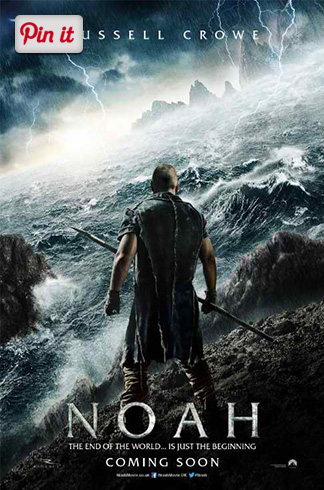
10.) NOAH

Book Excerpt: “If man continued in his ways, the Creator will annihilate this world.”
The Stars: Russell Crowe, Anthony Hopkins, Emma Watson, and Jennifer Connelly
Hits Theatres On March 28, 2014

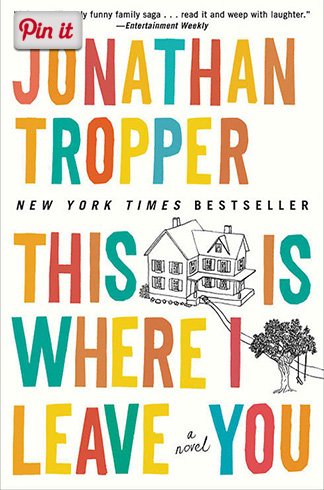
9.) This Is Where I Leave You by Jonathan Tropper

Book Excerpt: “It would be a terrible mistake to go through life thinking that people are the sum total of what you see.”
The Stars: Jason Bateman, Tina Fey, Timothy Olyphant, Jane Fonda, Rose Byrne, and Adam Driver
Hits Theatres On September 12, 2014

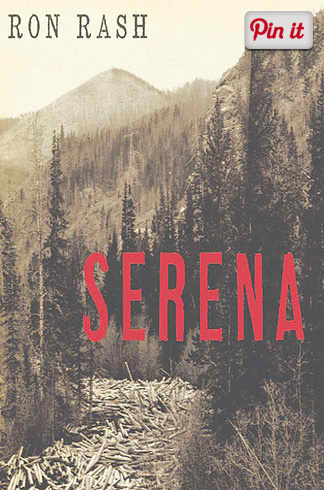
8.) Serena by Ron Rash

Book Excerpt: “You got one choice at the beginning but if you didn’t choose right, things got narrow real quick.”
The Stars: Teamed up once again by Jennifer Lawrence and Bradley Cooper
Hits Theatres On September 2014

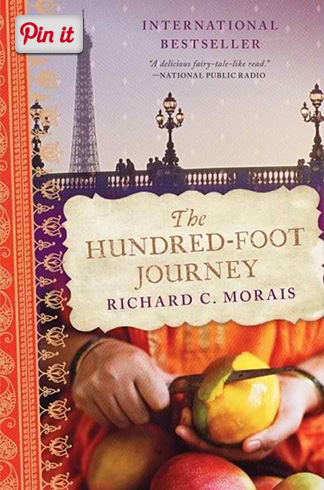
7.) Hundred Foot Journey by Richard C. Morais

Book Excerpt: “A lot of emotion went into that hundred-foot journey, cardboard suitcase in hand, from one side of Lumière’s boulevard to the other.”
The Stars: Helen Mirren, Manish Dayal
Hits Theatres On August 8, 2014

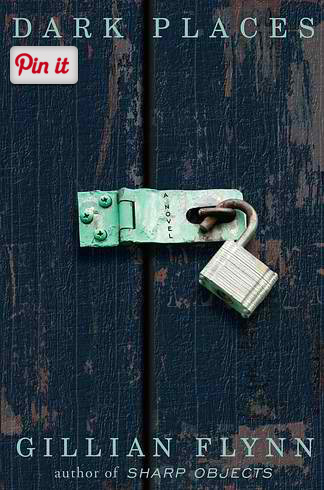
6.) Dark Places by Gillian Flynn

Book Excerpt: “I was not a lovable child, and I’d grown into a deeply unlovable adult. Draw a picture of my soul, and it’d be a scribble with fangs.”
The Stars: Chloë Grace Moretz, Nicholas Hoult, Charlize Theron, Christina Hendricks
Hits Theatres On September 1, 2014

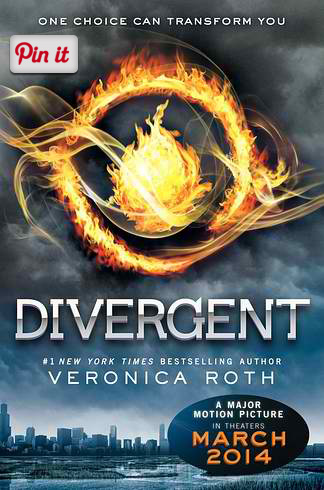
5.) Divergent by Veronica Roth

Book Excerpt: “Becoming fearless isn’t the point. That’s impossible. It’s learning how to control your fear, and how to be free from it.”
The Stars: Shailene Woodley, Theo James, Kate Winslet
Hits Theatres On March 21, 2014

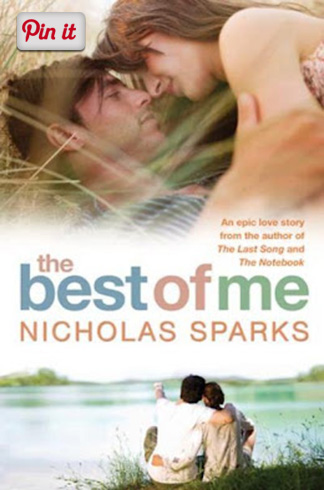
4.) The Best of Me by Nicholas Spark

Book Excerpt: “Don’t take my advice. Or anyone’s advice. Trust yourself. For good or for bad, happy or unhappy, it’s your life, and what you do with it has always been entirely up to you.”
The Stars: Michelle Monaghan as Amanda
Hits Theatres On October 17, 2014

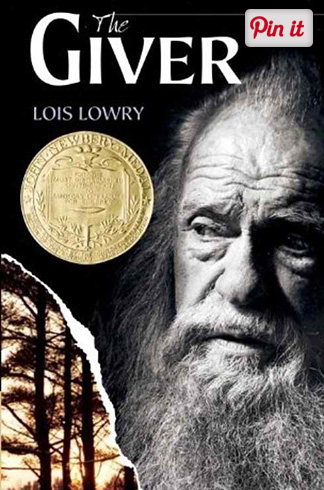
3.) The Giver by Lois Lowry

Book Excerpt: “I knew that there had been times in the past-terrible times-when people had destroyed others in haste,in fear, and had brought about their own destruction”
The Stars: Jeff Bridges, Meryl Streep, Alexander Skarsgård, Taylor Swift
Hits Theatres On August 15, 2014

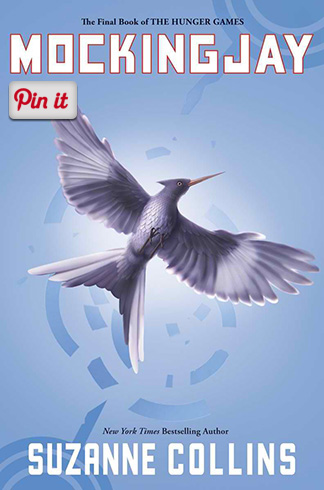
2.) Mocking Jay by Suzanne Collins

Book Excerpt: “It takes ten times as long to put yourself back together as it does to fall apart.”
The Stars: Jennifer Lawrence
Hits Theatres On November 21, 2014

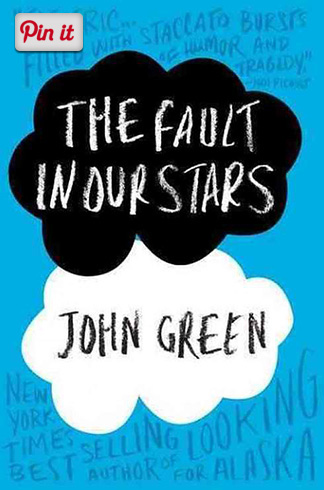
1.)  The Fault In Our Stars by John Green

Book Excerpt: “Sometimes, you read a book and it fills you with this weird evangelical zeal, and you become convinced that the shattered world will never be put back together unless and until all living humans read the book.”
The Stars: Shailene Woodley and Ansel Elgort
Hits Theatres On June 6, 2014

Have something to add to this story? Share it in the comments