Speed Reading For Education

7 Speed Reading EDU is the world's most advanced accelerated reading system for schools. Based on proven principles of faster reading, 7 Speed Reading EDU contains all the features of 7 Speed Reading plus:

The next step is to see 7 Speed Reading for yourself. Simply fill out the form and we'll send you a free no obligation trial of the full version of 7 Speed Reading EDU.

speedreadingtechniques.org

On the pro side it has easy-to-use interface, video tutorials, multiple user accounts, well-structured course system for beginners & advanced students plus the ability to exercise with any digital text.

Elbert Zeigler

"I found 7 Speed reading. Doing eye exercises, warm-ups before reading, and how to look at words in groups instead of one at a time improved my reading and comprehension. I recommend 7 Speed Reading for you."

courselounge.com

7 Speed Reading is a decent speed reading software with an innovative approach. The customizable features are quite appealing since it allows you organize your speed reading training effectively.

Daniel Walters

"I have always struggled with reading slowly. Once I started using 7 Speed Reading, I did notice an improvement from approx. 200 wpm to 300 wpm."

winningspirit.com

If you want to learn how to speed read so that you can read everything faster, your best option is to get the self-paced speed reading course called 7 Speed Reading. It is designed to be the world’s most powerful speed-reading training program.

bestadvisor.com

From learning how to read and comprehend faster to how to keep your eyes healthy, everything is covered in this course for almost any age, and a team of professionals will help you master it.

Stephen L. (Reviewer)

I liked the accessibility of it. It helps, because users are able to easily maneuver throughout the software to varying levels and practice their reading at varying speeds.

Devad Goud

After having used this software, I learned techniques and skills such as eliminating my subvocalization, which not only greatly enhanced my speed reading, but also allowed me to get more engagement in what I read.

Reinard Mortlock

The biggest problem I had was sub-vocalization, 7 Speed Reading helped a lot with techniques to improve this and substantially improve my reading speed. The application is easy to use with loads of books to read to improve your reading skills.

Adel Serag

When I seriously exercise using the app, in no time, my reading speed goes from less than 400 to 600 and my target is 900 plus.

Nik Roglich

The pace trainer is great for getting my eyes focused and sharp. Also the word search exercise is very important, gets me searching for specific text.

Jose Godinez

I have improved my speed reading and comprehension since I started using 7 Speed Reading, I enjoy using it and I will continue to use it in the future.

The Benefits of Using the Best Speed Reading Software (Guest Post)


Speed reading software teaches people to read articles and documents quickly, and helps them learn how to instantly scan and comprehend text line by line instead of word by word. The best speed reading software teaches this important technique, and such software will also have other benefits. For example, the best speed reading software is easy to use, and so can be used by anyone regardless of their age or educational background. For instance, a post graduate student can use it and get good results, and a high school student can also use it for their learning needs. Another benefit the best software provides is that the user is able to access the application from any computer; they can learn anywhere, at any time, as long as they have a computer or laptop.

The most obvious benefit of the best speed reading software is that it increases the user’s reading speed when they use it. A person can increase their reading speed by up to three times each week by regular practice. The more times a person uses the application the more they increase their reading speed. The best reading speed software is also has easy to follow instructions, enabling the user to adjust a wide range of parameters to suit their own learning style. The user can also reinforce all the techniques that are important for becoming an efficient reader. A speed reader is able to do a lot of reading faster and so will enjoy the reading process.

The best speed reading software is a learning tool and combines both physical and physiological methods. These methods should be supported by empirical evidence attesting to the fact that they work, and that the exercises have practical utility. Another major benefit from the best speed reading software is that it provides additional exercises after each reading lesson that keep the user’s brain in good overall shape. The exercise enables the user to learn to think and answer based on the reading done previously. The exercises are useful as they help to practise for exams or interviews, giving the user the experience of how to answer questions based on previous study. The best speed reading software also offers a range of exercises that are based on the readings made in the chapter or unit.

The best speed reading software promotes learning by providing instantaneous feedback. The reason this is important is because the user can examine if they have benefited or learnt something from the reading exercises just completed. The more questions in the exercises the user can answer the more they understand or comprehend the reading. The reading speed of the user is also another feedback point, showing how it increases or improves with time. Good speed reading software allows the users to comment on how much knowledge they have gained. The best speed reading software also has many tracking tools and reports that are useful and accurate. This provides proof of the credibility of the speed reading software.

The best speed reading software also has interactive games and learning tasks for the students. The games and learning tasks help the students to take a break from the more intensive reading exercises, and enhances their memory and understanding of the reading material in fun ways. They engage the students and encourage them to participate in the games and learning tasks, thus enabling learning to continue despite the break. Games are useful as students love games and also play them willingly. Therefore, offering users the opportunity to engage in games and learning tasks as they read enable them to improve their reading, as they are eager to find more games. The users can also enjoy stories that are present in the software. The best software will provide stories that are based on a wide variety of topics.

The best speed reading software also provides a wide range of programs that are designed professionally. These programs are calibrated in order to meet the needs of the individual and groups using the software. The user is also able to pursue a curriculum that is structured, focused and designed by the user on their own.

Anyone can benefit from the best speed reading software as it improves comprehension and understanding of the reading. This is because such a software product has interactive games, stories, exercises and learning tasks that aid in understanding as they provide a practical example to the theory discussed. It also helps the users to train their eyes and brains from one step to another. The best speed reading software also provides results that are guaranteed. The software is parent-friendly and customizable thus can be adjusted to meet the needs of the user.

Author bio: William Delgado is a good researcher, and for the past several years, concentrated on academicals for students who require best essay writer with quality service to accomplish


The Art Of Success: Read, Retain, Relate… Read


What makes someone a success? What’s the secret of the world’s top leaders? Why do some people seem so charismatic and influential?

The art of success in leadership and society, as well as in other areas, is due to reading. What seems to be a fairly simple activity is in fact the alpha and the omega when it comes to success.

Reading presupposes a passion for being ahead of the pack and it exhibits an undying wish to be knowledgeable and relevant at any given time. Successful people are aware of how crucial reading is for success, and that’s why they are more often than not voracious readers.

While easy in theory, in practice reading can be a time-consuming process, depending on your reading speed. It’s not enough to be an avid reader, you need to also be time-efficient. If it takes you more than 5 hours to read a typical 250-word book then your reading speed is below average. It’s simple: the faster you read, the more you learn, and the better equipped for success you’ll be.

So what’s the best formula in becoming successful? In a few words, follow the 4 Rs approach: Read, Retain, Relate, and Read.

Read

The first step is the most crucial. Read a book in a distraction-free environment so as to make it possible for the next two steps to work. The more focused you are, the better the results will be, and the more you will get out of every book.

Retain

This step is not really a separate process from the first step, once you’ve trained yourself in the concept.

When you read you need to understand what you’re reading. That’s why reading is a complex cognitive process. It requires a great deal of concentration to be able to read, understand the information you read, and put that new information in a new context.

Retaining what you read essentially means being able to explain what you’ve learned to another person.

Relate

For knowledge to stick, you need to relate what you’ve learned to previous knowledge. If you keep each body of knowledge distinct from one another, you’re losing a lot of valuable insights.

This process is a creative and prolific habit you should get into. If you’re reading a book on emotional intelligence, for example, see how the new information relates to what you knew about it already. See how emotional intelligence contradicts or compliments your knowledge of other types of knowledge, and so on.

The “Relate” step is crucial because it solidifies what you know as merely information into usable knowledge. What you’ve learned is no longer stand-alone information; once processed, it becomes knowledge you can retrieve at a moment’s notice and which can help you deal with an unexpected scenario or new circumstances.

Read

The fourth step is to read again. But it’s a bit different than the first step, this time. Here, “read” means to continue building knowledge upon knowledge, a key component of success.

Becoming successful is not a one-time event, it’s a life-long pursuit that calls for determination and a great deal of drive to achieve. Unless reading becomes part and parcel of your life, you won’t be able to achieve your full potential. Turn your screen off and read, retain, relate and then read some more!


Have something to add to this story? Share it in the comments

Different Speed Reading Software Reviewed, Find Out Who Ranks #1


Do you ever wish you knew how to read two, three, or even more books in a matter of hours? People who’ve mastered the art and science of speed reading have done so, thanks to one speed reading program.

Several software reviewers have evaluated a range of speed reading software systems that help students learn how to speed read, and the decision is unanimous: 7 Speed Reading™ by eReflect is by far the most comprehensive and effective speed reading software on the market.

Click here to learn more about 7 Speed Reading

TopTenReviews names 7 Speed Reading™ its Gold Award Winner

One of the most thorough appraisals 7 Speed Reading™ has ever received comes from the TopTenReviews editors, who gave the software an overall rating of 9.95. The editors concluded that this software is a feature-rich and user-friendly speed reading program.

The TopTenReviews editors highlight other advantages of 7 Speed Reading™, such as its progress monitoring tool and its multiple user account capacity.

For 2014, Top TenReviews finds 7 Speed Reading™ the most effective and comprehensive program available. Compared with the features, tools, and technologies of other speed reading improvement programs, 7 Speed Reading™ seems to defy every one of its competitors. Its suitability for people of all ages and reading levels is another hard to miss benefit of the program, say the reviewers.

As the TopTenReviews editors point out, 7 Speed Reading™ offers a targeted yet balanced learning solution for people who wish to speed read, ensuring learners improve both their reading speed and reading comprehension.

Spreeder praises 7 Speed Reading™ for offering a personalized learning experience

In a detailed review of 7 Speed Reading™, Spreeder analyses the software’s progress tracking tool, revealing the ways in which it’s more than just progress monitoring. Its ultimate goal is to offer each learner a premium, customized learning experience designed to boost their reading speed. More specifically, as the Spreeder editor reveals, “In testing their product, eReflect discovered that this customized learning approach increased results by over 163%, and reduced the required effort of students by over 221%.”

Typing Lounge confirms 7 Speed Reading™’s premium quality

Typing Lounge is a typing skills authority, but the editors are concerned with all aspects of language improvement, including reading. The site has released a series of speed reading software reviews in which the top position is reserved for 7 Speed Reading™, eReflect’s reading and comprehension improvement program.

The review by Typing Lounge is objective and thorough; the editors pick apart all its features, sorting them into pros and cons for their readers’ convenience.

The software’s user-friendly interface, its wide variety of games and activities, and finally its ebook library that numbers more than 600 ebooks are the main highlights Typing Lounge emphasizes in their review.

After an evaluation of the program’s features such as its training modules, the touch typing video tutorials, and its progress tracking technology —all of which contribute to an accelerated reading speed — Typing Lounge remarks, “7 Speed Reading™ software is perfect in every way.”

The overall rating 7 Speed Reading™ received from Typing Lounge is 9/10.

So far, 2014 has been a star-studded year for 7 Speed Reading™, and it has been receiving appraising and approving reviews by many respectable organizations and review sites. The combination of features, the latest technologies, and the developers’ passion for educational technology all contributed to 7 Speed Reading™ becoming a top ranking speed reading program.

Click here to learn more about 7 Speed Reading


Have something to add to this story? Share it in the comments

Summer Speed Reading: Ease Your Boredom & Become More Knowledgeable


What are you reading this summer? Or don’t you plan to read at all? After all there are many other pleasurable distractions in summer, like beach parties, barbeque parties, vacations, and mouthwatering cocktails.

But even with these pleasurable activities, there are instances when summertime can get a bit dull and repetitive. For example, what do you do while you’re sitting fishing on the dock, or killing time while in the plane boarding lounge? These hours can be filled with a great book. Besides, not every summer day is vacation day, and you need to do your best to ease your boredom and stay knowledgeable so that when autumn arrives you won’t have lost any of your edge.

Here are our top 10 books you can speed read this summer.

Think Like a Freak: How to Think Smarter about Almost Everything

Levitt and Dubner follow up their success with the book “Freakonomics” to show you how to adopt a new way of thinking — which sometimes mean thinking and acting like a child would!

Buck

A book inspired by a true story, “Buck” tells the story of a kid going against all odds in life and succeeding. This coming-of-age memoir by M. K. Asante perfectly illustrates the key role played by education and literature to inspire, heal, and move us closer to personal fulfillment.

Tomboy

A graphic memoir by Liz Prince, this is an excellent demonstration of how many girls and boys struggle with gender ambiguity in their first years of development and later in social settings, caught between the standard “girly” and “boyish” predilections on play, dressing and being.

Liz Prince gives us a glimpse into her psyche and how we live in a paradox of rejecting gender roles and at the same time fully embracing and championing them. Suzy X from Rookie Mag comments, “It’s not very often you read a goofy coming-of-age comic written with an astutely critical lens… and then there’s Liz Prince’s ‘Tomboy.’”

American Afterlife

Before you declare this book too creepy for the beach, hear me out. It’s a testament of how Americans are commemorating their dead, what rituals they follow, and what this eventually means for how people mourn, move on, and become more resilient. By Kate Sweeney.

Blue Mind: The Surprising Science That Shows How Being Near, In, On, or Under Water Can Make You Happier, Healthier, More Connected, and Better at What You Do.

This book by Wallace J. Nichols explores the ubiquitous but often overlooked role that water plays in our physical wellbeing and sanity. A great tribute to how water influences our mood, mindset, and health. Wallace is a marine biologist infatuated with water’s magnificent power.

The Working Memory Advantage: Train Your Brain to Function Stronger, Smarter, Faster

Tracy and Ross Alloway give us this masterpiece on memory improvement and how we can make the most out of this unique human capacity we all share. A must-read if you never seem to remember to return your mom’s calls.

Eating Wildly

This book by Ava Chin takes you by the hand and shows you what foraging for food in New York looks like. This memoir expresses our universal need to be connected to and in harmony with nature, our most natural habitat.

Naked Imperfection: A Memoir

A heartfelt, inspiring memoir by breast-cancer survivor Gill Deacon. With brutal honesty she shares with readers her struggle and ultimate victory. A bit heavy for summer perhaps, but a great read nonetheless that puts life into perspective.

This One Summer

This book will certainly make your summer unforgettable. If you expect the protagonist’s summer to be just like every other one, you couldn’t be more wrong. A heart-throbbing story of a girl’s coming of age by Mariko Tamaki.

The Chimp Paradox: The Mind Management Programme to Help You Achieve Success, Confidence and Happiness

Chris Peter is a consulting psychiatrist for many organizations and firms, including the national English Football team. With this book on mind programming, he shares the Chimp Paradox model, and explains how he helps individuals take full control of their mind and unlock their true potential.

Cross-posted on the Spreeder blog.


Have something to add to this story? Share it in the comments

Summer Speed Reading: Ease Your Boredom & Become More Knowledgeable


What are you reading this summer? Or don’t you plan to read at all? After all there are many other pleasurable distractions in summer, like beach parties, barbeque parties, vacations, and mouthwatering cocktails.

But even with these pleasurable activities, there are instances when summertime can get a bit dull and repetitive. For example, what do you do while you’re sitting fishing on the dock, or killing time while in the plane boarding lounge? These hours can be filled with a great book. Besides, not every summer day is vacation day, and you need to do your best to ease your boredom and stay knowledgeable so that when autumn arrives you won’t have lost any of your edge.

Here are our top 10 books you can speed read this summer.

Think Like a Freak: How to Think Smarter about Almost Everything

Levitt and Dubner follow up their success with the book “Freakonomics” to show you how to adopt a new way of thinking — which sometimes mean thinking and acting like a child would!

Buck

A book inspired by a true story, “Buck” tells the story of a kid going against all odds in life and succeeding. This coming-of-age memoir by M. K. Asante perfectly illustrates the key role played by education and literature to inspire, heal, and move us closer to personal fulfillment.

Tomboy

A graphic memoir by Liz Prince, this is an excellent demonstration of how many girls and boys struggle with gender ambiguity in their first years of development and later in social settings, caught between the standard “girly” and “boyish” predilections on play, dressing and being.

Liz Prince gives us a glimpse into her psyche and how we live in a paradox of rejecting gender roles and at the same time fully embracing and championing them. Suzy X from Rookie Mag comments, “It’s not very often you read a goofy coming-of-age comic written with an astutely critical lens… and then there’s Liz Prince’s ‘Tomboy.’”

American Afterlife

Before you declare this book too creepy for the beach, hear me out. It’s a testament of how Americans are commemorating their dead, what rituals they follow, and what this eventually means for how people mourn, move on, and become more resilient. By Kate Sweeney.

Blue Mind: The Surprising Science That Shows How Being Near, In, On, or Under Water Can Make You Happier, Healthier, More Connected, and Better at What You Do.

This book by Wallace J. Nichols explores the ubiquitous but often overlooked role that water plays in our physical wellbeing and sanity. A great tribute to how water influences our mood, mindset, and health. Wallace is a marine biologist infatuated with water’s magnificent power.

The Working Memory Advantage: Train Your Brain to Function Stronger, Smarter, Faster

Tracy and Ross Alloway give us this masterpiece on memory improvement and how we can make the most out of this unique human capacity we all share. A must-read if you never seem to remember to return your mom’s calls.

Eating Wildly

This book by Ava Chin takes you by the hand and shows you what foraging for food in New York looks like. This memoir expresses our universal need to be connected to and in harmony with nature, our most natural habitat.

Naked Imperfection: A Memoir

A heartfelt, inspiring memoir by breast-cancer survivor Gill Deacon. With brutal honesty she shares with readers her struggle and ultimate victory. A bit heavy for summer perhaps, but a great read nonetheless that puts life into perspective.

This One Summer

This book will certainly make your summer unforgettable. If you expect the protagonist’s summer to be just like every other one, you couldn’t be more wrong. A heart-throbbing story of a girl’s coming of age by Mariko Tamaki.

The Chimp Paradox: The Mind Management Programme to Help You Achieve Success, Confidence and Happiness

Chris Peter is a consulting psychiatrist for many organizations and firms, including the national English Football team. With this book on mind programming, he shares the Chimp Paradox model, and explains how he helps individuals take full control of their mind and unlock their true potential.

Cross-posted on the Spreeder blog.


Have something to add to this story? Share it in the comments

14 Astonishing Libraries Book Lovers Will Visit For Sure. #7 Is Definitely Stunning! (PHOTOS)


Learn speed reading now to read all the books that these libraries offer.

1) Library of the Dutch Parliament

Where: Handelingenkamer, Netherlands
Did You Know?

The construction of the library was mostly made up of massive leaded glass dome in the ceiling that allows light and minimizes the need for candles and gas lamps inside the library. This made the storage of books a lot safer which mostly contains every record of parliamentary hearings and discussions.

2) Real Gabinete Portugues de Leitura

Where: Rio De Janeiro, Brazil
Did You Know?

The library fits 350,000 Volumes of book in just one room. The building has four stories allowing maximum shelf space. It also houses a small collection of sculptures, paintings, and coins.

3) Trinity College Old Library

Where: Dublin, Ireland
Did You Know?

The Illustrated Book of Kells, dated from the 9th century and created by Celtic Monks, is still available in this library. The library is the largest library in all of Ireland with two story dark wooden arches to add beauty on it.

4) University of Aberdeen New Library

Where: Aberdeen, Scotland
Did You Know?

It is a 167, 000 square foot building that has fluid curves in the interior. The developers maximize natural light and energy savings by installing insulated panels and high-performance glass. It offers 1, 200 individual study spaces for students who enjoys reading and studying!

5) Mitchel Library

Where: Sydney, Australia
Did You Know?

The building was established on 1826. As of now, the total size and collection of books the library has reached 5 million items.

6) Victorian State Library

Where: Melbourne, Victoria, Australia
Did You Know?

Victorian State Library is one of Melbourne’s largest public reference libraries. The collections include ephemera, artworks, audio and video files, digitised copies of works, music scores, books and more.

7) Stuttgart City Library

Where: Stuttgart, Germany
Did You Know?

The library’s total area is 20, 225 m2. It is 9-storey Building full of books with study rooms, cafes. Functional space, technology rooms, etc.

8) Codrington Library

Where: Oxford, England
Did You Know?

The library comprises of 185, 00 items. It was completed in 1751 and was renovated in the late 1990s.

9) Bibliotheque Nationale de France

Where: Paris, France
Did You Know?

National Library of France has a collection that ranges from books, journals, newspapers, magazines, sound and music recordings, patents, databases, maps, stamps, prints, drawings, and manuscripts. The library has a total of 40 Million Items wherein 14 Million of those items are books and publications.

10) Jose Vasconcelos Library

Where: Buenavista, Mexicaco
Did You Know?

The press called Jose Vasconcelos Library the Megalibrary. The creation was dedicated to Jose Vasconcelos, the philosopher and former president of the National Library of Mexico. Jose Vasconcelos Library was considered one of the most advanced constructions of the 21st century.

11) Iowa State Capitol Law Library

Where: Des Miones, Iowa
Did You Know?
The building was built in 1884 in a Renaissance Concept. The State Law Library of Iowa is filled with leather-bound case law books.

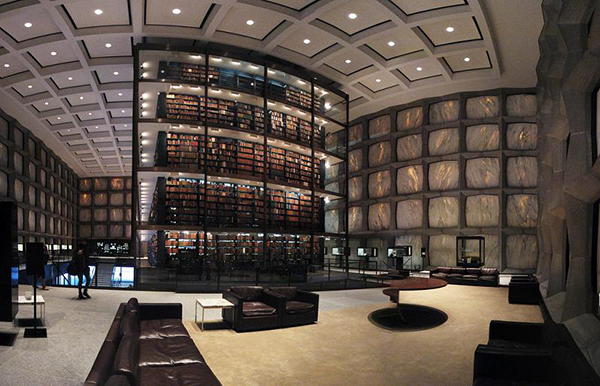
12) Beinecke Rare Book & Manuscript Library

Where: Yale University, New Haven, United States
Did You Know?
One of the world’s largest libraries, Beinecke Rare Book & Manuscript Library, contains rare books and manuscripts of Yale University.

13) Jay Walkers Private Library

Where: Ridgefield, Connecticut
Did You Know?

A 3,600 sq. ft. private property, The Walker Library of the History of Human Imagination contains more than 50, 000 volumes.

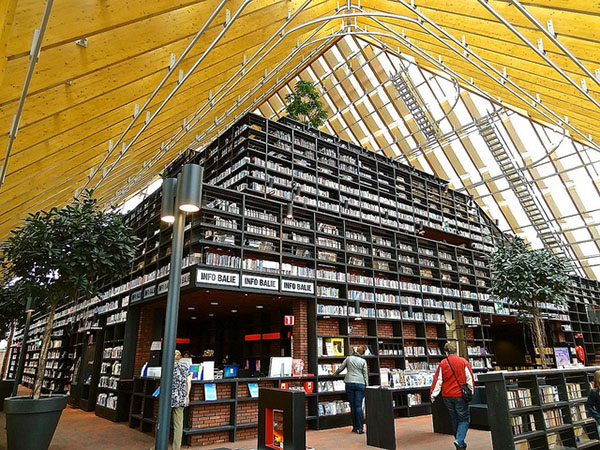
14) Book Mountain Library

Where: Spijkenisee, The Netherlands
Did You Know?
The Netherlands’ new public library which holds a mountain of 50, 000 books readers will enjoy. The building is shaped like a pyramid with a glass shell ceiling.


Have something to add to this story? Share it in the comments

Educational Connection Towards Excellence With Prof. David Pecoraro of www.studentcaring.com


Colleges years are stressful times, and students can benefit from good advice given by people who know what they’re going through. Often that advice comes from other current or former students; after all, who knows a student’s issues better than a fellow student? Well, sometimes a teacher does. The advantage that a teacher has is that they’re able to stay outside of the stress and emotion that the student is experiencing, and provide thoughtful, rational, and helpful suggestions to solve the problems that they’ve watched crop up over and over again in their classrooms. A new website created by two university professors gives students the resources they need to make the most of their college years.

UV: Prof. Pecoraro, you talk about your love of teaching and the importance of helping instructors find ways to work with their students to develop a good environment for learning. If a student isn’t finding that connection with their teacher, what can the student do to improve the situation?

David Pecoraro (DP): When I began to teach I discovered that I had the ability to teach a student something and they could repeat it and make money. After five years, previous students were coming back for a visit or writing to let me know that they had not just made money on a first job, but had found a career and life direction. Discovering that I was doing much more than just helping my students to make money prompted me to take my job to a whole new level of excellence and focus.

As I became more experienced my colleagues elected me to lead faculty development initiatives with the focus on providing educational opportunities to improve teaching. At the universities where I did (and do) this, I discovered that there was a need for professors, who were hired for the knowledge and degrees that they had, but had no prior experience about how to teach. This too was rewarding because I was not only helping the professor, I was helping all of their students. All too often, colleges put their resources toward many, many, areas which have nothing to do with the most important thing; teaching excellence.

Students who are not “connecting” with their professors can be in a tough situation. Nothing in our world is more complex than the relationship between two people. We are all unique and when we connect, we are grateful. When we do not, there is no one answer that will work for every student and their professor.

In the classroom, the responsibility is primarily with the professor to connect with and teach whoever is in their class. It is the responsibility of the student to work hard and follow the professors guidelines for learning, ideally set forth in the course syllabus. If the student is still struggling to “connect”, they can (and should.):

  1. Schedule a time to meet with the professor during their office hours. (Don’t think of their office as “Teacher’s Turf,” it is a meeting place for one to one learning, and you need to become comfortable with that which is uncomfortable). Students, get your monies worth! The professors office is also a place where you may discover more about them as a person and not just the person who teaches you.
  2. Exceed the professors expectations. Do more than they ask for. Not only will you learn more, you will get the professors attention and in doing so, create an opportunity for an educational connection.
  3. Research the professor! Talk to students who have taken their classes before and understand their teaching (and testing) style. Yes, even ratemyprofessor.com can provide you with some insights, just be sure to read between the lines. Many colleges will also make available to students, professors ratings. Remember, sometimes the professors who are rated low are often exceptionally good at what they do, just more challenging.
  4. Meet with other students in the class who do connect with that professor. You will gain insights and perspectives otherwise not known to you.
  5. Find opportunities to communicate with your professor about the course material. These may include time before or after class, an email or online community forum. Even a handwritten note on the back of an assignment or test. Most professors will always respond positively to a student who makes an effort.
  6. When you complete the course evaluation, be honest and take time to provide detailed information about how the class went for you. Professors are always learning too.

UV: For many students, the amount of study and homework required in their college classes is often a shock, especially if they were previously enrolled in a public school that was underfunded or took classes that weren’t a challenge. Other than learning speed reading techniques to help get through the books and papers they’re assigned, what can students do to learn to cope with an increased workload?

DP: The first step to managing the increased workload that can come with college is to prioritize what is most important to you. This can be both revealing and rewarding.

  1. The semester begins before the semester begins. With your schedule in hand begin to calendar all your classes and the time that you will spend outside of the classroom to do homework and prepare for the next class. You can figure about three hours outside of class for every one hour in class.
  2. During your first week of classes, with the syllabuses for your classes in front of you, calendar all important dates including; quizzes, tests, mid-terms, and the final.
  3. These scheduled dates and times are not movable. Keep track of your progress as you start to live out your semester calendar. If you are not attaining the success that you had hoped for, adjust your schedule to allow for more study time or time with a teachers assistant or mentor.
  4. When an invitation for social time, or any other non-academic commitment comes to you, always check your calendar before committing. This doesn’t mean that you can’t have social time, in fact, you should! It means that you base your answer on what is most important to you for that date and time.
  5. If you discover (as you review your schedule at the end of each week) that you are spending more or not enough of your time on non-academic activities, then you have revealed to yourself that college is not that important.

    To connect with my students, I asked in a class recently, “What is your favorite fast-food restaurant?” The universally agreed answer was: “Anything open after two a.m.” This gave an insight that I did not previously have!
  6. Get enough sleep and eat healthy food.We make time for that which is most important to us. During the few short years when you are in college, you need to learn to spend your time on the most important activities. Most of us only go to college once and it is this time that often determines much of the rest of our lives.

UV: In today’s economic climate, even a four-year college degree isn’t a guarantee of employment. How do you counsel students and encourage them to continue with their education if they’re afraid they won’t be able to find a job in their field?

DP: I explain that college is about much more than increasing their ability to get a job. It is about learning how to learn, a skill that you will benefit from in countless ways throughout your lives. This became obvious to me after I was out of college. Without the structure of the courses I was required to take, I was now free to learn whatever I wanted to and I knew how to do it. Today, most employers are not interested in what you know, but in your ability to learn.

I also tell then a story about how when I was in High School, they put me into a typing class (with all girls, not bad at all) because they did not know what to do with me. I hated every minute of it! Nonetheless, I learned to type and actually hit 80 words per minute. I saw absolutely no value in this until two years latter when the personal computer became available. I had a skill that few of my fellow graduates did when I graduated. You cannot predict how, what you are learning now, will benefit you in the future.

UV: For our blog readers who are educators, what’s one thing they can do to make their classroom a more productive place for both learning and personal development?

DP: Get to know who your students are every time.

The Student Caring Project advocates a new way of thinking about college.  In the current climate of high costs, course cutbacks, and increased pressures on students’ time, students often feel more like numbers going through diploma mills than like people being educated for full and productive lives.

Cross-posted on the Ultimate Typing blog.


Have something to add to this story? Share it in the comments

How To Help Your Child Enjoy Reading


What do you do when you have children who can read, but just won’t? Is a love for reading something parents and teachers can inspire in children, or is reading something we’re born to like or dislike?

To encourage your child to love and enjoy reading you first need to understand the factors that may be preventing them from enjoying reading.

More appealing pastimes

It’s no wonder that children prefer to play video games, chat with friends or just watch TV – these are more enjoyable activities because they don’t require much effort.

To make reading a more appealing alternative to video games why not introduce them to foolproof, age-appropriate, best-sellers? You can even start out with book that inspired a child’s favorite movie or television program. Before you know it, your child will be writing fan-fiction on their favorite books.

Boring, uninspiring books

Children don’t like wasting their time on things that are irrelevant or just plain boring, and who can blame them? Adults don’t either. Rev up the interest factor by trying out different genres and media for reading until you find what works for each child. For example, getting them an e-reader, so similar to the tablets they use for playing games, might motivate a child to read more.

Difficult and frustrating

If your child is having reading difficulties this will naturally draw them away from reading. Talk with the child’s teacher and focus on identifying and/or ruling out any learning difficulties. Ask the teacher if they have suggestions for a course of action that would help the child get interested in reading.

Often something as simple as assigning a purpose to reading (e.g. learning about how planets form) will make the activity seem more meaningful and appealing.

Cultivate a love for reading

It’s actually easy to get your child to enjoy reading. Here are the five first basic steps to achieve this:

1) Recommend reading material based on things you know they already like. If that’s Batman, give them lots of comic books to start reading.

2) Be a role model. Don’t sit with a tablet in one hand and your smartphone in the other. Read books, magazines, and newspapers. Put new books and journals in places your child usually hangs out. Even if it’s just out of curiosity, they will at least skim through an article or chapter!

3) Organize activities around reading, like frequent library visits. Join a parent-child book club, play reading-related games like spelling games, and make family evenings together the time to bring out word board games like Scrabble.

4) If your child is young enough for bedtime stories, make a habit out of it. Reading out loud will get your child to grow fond of reading and ask for more material to read on their own.

5) Start building a home library with books you read together. This will be soon considered an ongoing, open-ended project where newly read books will be added to an ever-growing library.


Have something to add to this story? Share it in the comments

”Cli fi” Rising To New Hollywood Heights (Guest Post)


Dan Bloom


It’s not every day that TIME magazine follows what NPR and the New York Times set in motion, but the May 19 issue of the weekly magazine does just that, and with aplomb. Reporter Lily Rothman went even a step further in her summer movie preview in the culture section headlined “Godzilla, ‘Into the Storm’ and More Summer ‘Cli-Fi’ Thrillers,” gently pushing the emerging genre of cli fi directly to the titans of Hollywood.

Steve Tisch, are you following? John Blumenthal, savvy screenwriter and comic wit, are you reading? Christopher Nolan and Shekhar Kapur, will your new movies follow the cli fi meme, too?

Hollywood has long shown an interest in climate-themed movies, from “Solyent Green” to “Noah.” But as the world continues to warm up miniscule degree by miniscule degree and puts the very existence of the human species at a very grave risk. cli fi film directors have their work cut out for them. There is a whole new world of cinema to explore, and while sci fi has served Hollywood well — and vice versa — here comes cli fi to wake up the world.

“A surge of summer movies reflect our environmental anxieties,” Time’s copy desk subheadlined Rothman’s thoughtful piece, and so they do, so they do.

“Snowpiercer” (a cli fi movie from South Korea due for a limited release in North America on June 27) stars Captain America’s Chris Evans and he tries to cope with “societal strife in a new ice age,” as Time spotlights the movie’s focus.

Rothman doesn’t mince her words, adding: “Some say films like these are helping define a new subgenre:’cli-fi,’ or climate fiction. It’s a timely subject for the summer [of 2014], given that the National Climate Assessment released May 6 found that the U.S. is already seeing the effects of climate change. Though the havoc in each film is wreaked in its own way, all of them use environmental destruction to raise the stakes.”

No, Godzilla doesn’t wear ”a Greenpeace logo on his back,” as Rothman writes in one of her best lines in the 1500-word article. But ”Godzilla”’ producer Thomas Tull tells Time that he didn’t
want the movie to hit audiences too hard with a too-green message, he still hopes the Japanesey flick will resonate with a global audience as the world’s nations grapple with climate change and man-made global warming over the next 100 years.

“Snowpiercer” distributor’s spokesman Tom Quinn told Rothman that he “can reel off a whole list of themes he thinks come up in the [Korean-helmed] movie set in a post-climate-change world, from
social class to income inequality.” Sure, it’s just a movie, but at the same time “Snowpiercer” pierces through the climate denialists misinformation tactics like a hot focussed laser.

“There’s a truth to this film that I think can extend beyond the tentpole movies of the summer,” Quinn was quoted as saying, adding that Snowpiercer could be “a Trojan horse for a younger audience that frankly might not want to talk about that stuff.”

“The Day After Tomorrow,” as readers old enough to remember will recall, came out 10 years ago, and in many ways led Hollywood into exploring climate-related issues and themes. Next up in the fall is Christopher Nolan’s “Interstellar,” which according my sources, has a strong cli fi theme, and after that there’s Indian director Shekhar Kapur’s futuristic water-wars themed movie titled “Paani” with John Travolta attached.

In Hindi, “paani” means water, and Kapur has a screenplay and a production concept for the film — to be shot on location in India and to feature water resource issues dividing rich and poor in a near future setting — that will blow a lot of earlier climate movies out of the water, he told me in a recent email.

I believe such current and future cli fi movies will succeed in helping audiences to confront environmental issues, much the way Nevil Shute’s 1957 novel ”On the Beach” — and the subsequent movie directed by Stanley Kramer — dramatized the horrors of nuclear war and nuclear winter and helped raise global awareness of the issues involved.

In my crystal ball, as I told Rothman in a phone interview for her magazine piece, there’s a new Nevil Shute is going to arise somewhere in the world, maybe even in Australia again, and he or she is going to wake people up with a powerful cli fi novel which will later be turned into an even more powerful movie.

It’s now time for Hollywood to go cli-fi, and I think it’s happening.

Godzilla director Gareth Edwards, 38, knows a thing or two about the power of the Hollywood dream machine to foster awareness of controversial issues.

“Sci-fi and fantasy have always reflected the fears of the time,” he told Time, adding: “I think that films like ‘Godzilla’ are like the fantasy punishment for what we’ve done. The real punishment will happen if we keep going this route. Films like this help remind us not to get too complacent-and that we should really try and fix some of these things that we’ve done before it’s too late.”

Before it’s too late. Underline those key words: ”before. it’s. too. late.”

TIME magazine on CLI FI movies, May 19, 2014 issue

Know more about CLI FI here.

Read More CLI FI Related Books in Goodreads.


Have something to add to this story? Share it in the comments

Who Said the Book is Better Than the Movie?


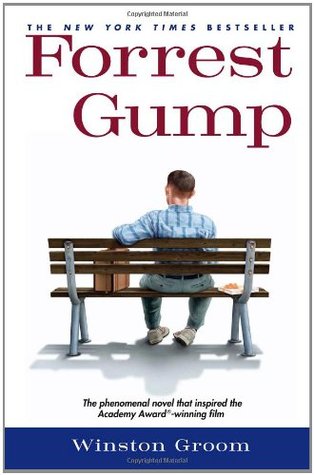
1) Forrest Gump

Book: Written by Winston Groom, 1986

Movie: Starred by Tom Hanks, 1994

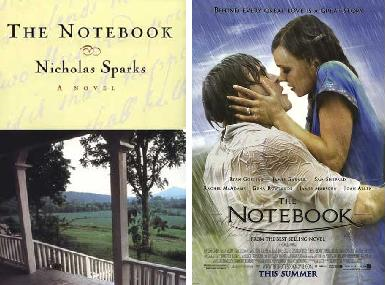
2) The Notebook


Book: Written by Nicholas Sparks, 1996

Movie: Starred by Ryan Gosling & Rachel McAdams, 2004

3) The Devil Wears Prada

Book: Written by Lauren Weisberger, 2003

Movie: Starred by Meryl Streep & Anne Hathaway, 2006


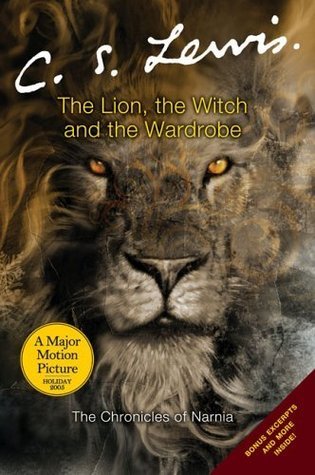
4)      The Lion, The Witch, and The Wardrobe

Book: Written by C.S. Lewis, 1950

Movie: Starred by Georgie Henley & Skandar Keynes, 2005

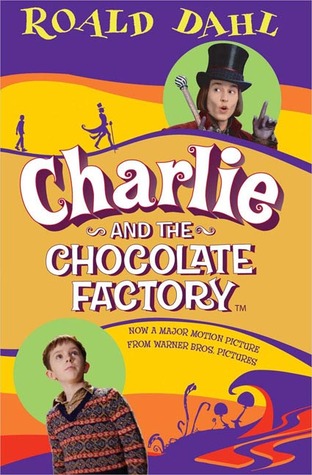
5) Charlie and the Chocolate Factory

Book: Written by Roald Dahl, 1964

Movie: Starred by Johnny Depp, 2005

 6)      V for Vendetta

Book: Written by Alan Moore and David Lloyd, March 1982

Movie: Starred by Hugo Weaving & Natalie Portman, 2006

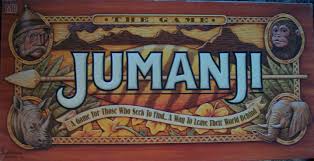
7)      Jumanji

Book: Written by Chris Van Allsburg, 1981

Movie: Starred by Robin Williams, 1995

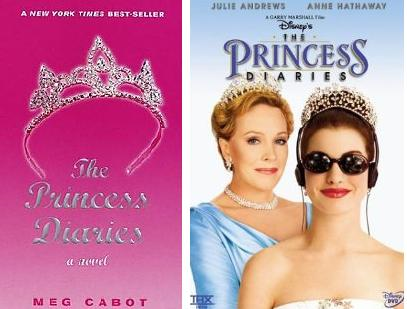
8)      The Princess Diaries

Book: Written by Meg Cabot, 2000

Movie: Starred by Anne Hathaway, 2001

9)      Jurassic Park

Book: Written by Michael Crichton, 1990

Movie: Starred by Sam Neill, Ellie Sattler & Jeff Goldblum, 1993


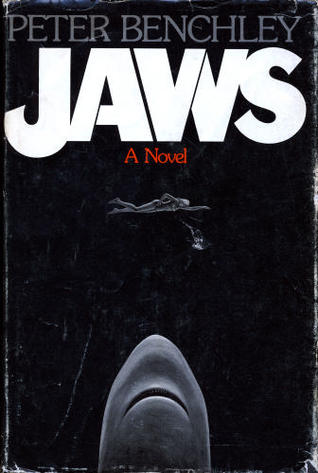
10)      Jaws

Book: Written by Peter Benchley, 1973

Movie: Starred by Roy Scheider, Robert Shaw, 1975


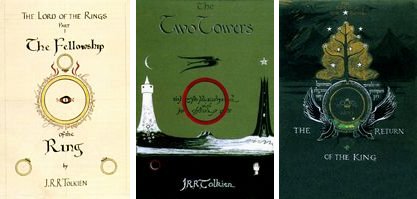
11)   The Lord Of The Rings

Book: Written by J.R.R. Tolkien, 1954

Movie: Starred by Elijah Wood, 2001


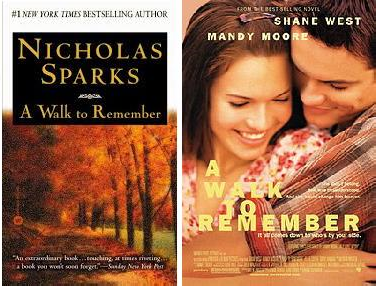
12)   A Walk To Remember

Book: Written by Nicholas Sparks, 1999

Movie: Starred by Mandy Moore & Shane West, 2002

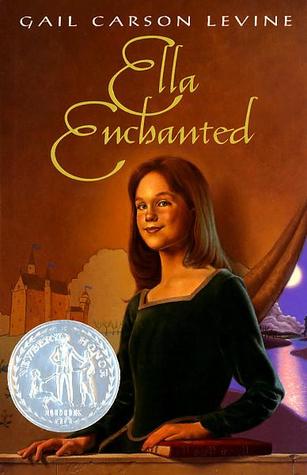
13)   Ella Enchanted

Book: Written by Gail Carson Levine, 1997

Movie: Starred by Anne Hathaway, 2004

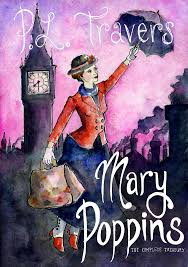
14)   Mary Poppins


Book: Written by P.L. Travers, 1934

Movie: Starred by Julie Andrews, 1965


Have something to add to this story? Share it in the comments